PrivyNet: A Flexible Framework for Privacy-Preserving Deep Neural Network Training
摘要
Massive data exist among user local platforms that usually cannot support deep neural network (DNN) training due to computation and storage resource constraints. Cloud-based training schemes provide beneficial services but suffer from potential privacy risks due to excessive user data collection. To enable cloud-based DNN training while protecting the data privacy simultaneously, we propose to leverage the intermediate representations of the data, which is achieved by splitting the DNNs and deploying them separately onto local platforms and the cloud. The local neural network (NN) is used to generate the feature representations. To avoid local training and protect data privacy, the local NN is derived from pre-trained NNs. The cloud NN is then trained based on the extracted intermediate representations for the target learning task. We validate the idea of DNN splitting by characterizing the dependency of privacy loss and classification accuracy on the local NN topology for a convolutional NN (CNN) based image classification task. Based on the characterization, we further propose PrivyNet to determine the local NN topology, which optimizes the accuracy of the target learning task under the constraints on privacy loss, local computation, and storage. The efficiency and effectiveness of PrivyNet are demonstrated with the CIFAR-10 dataset.
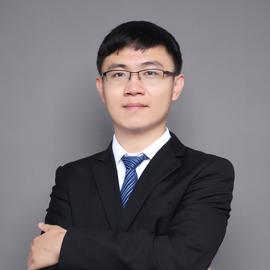
李萌
助理教授、研究员、博雅青年学者
李萌,北京大学人工智能研究院和集成电路双聘助理教授、研究员、博雅青年学者。他的研究兴趣集中于高效、安全的多模态人工智能加速算法和芯片,旨在通过算法到芯片的跨层次协同设计和优化,为人工智能构建高能效、高可靠、高安全的算力基础。